Overview
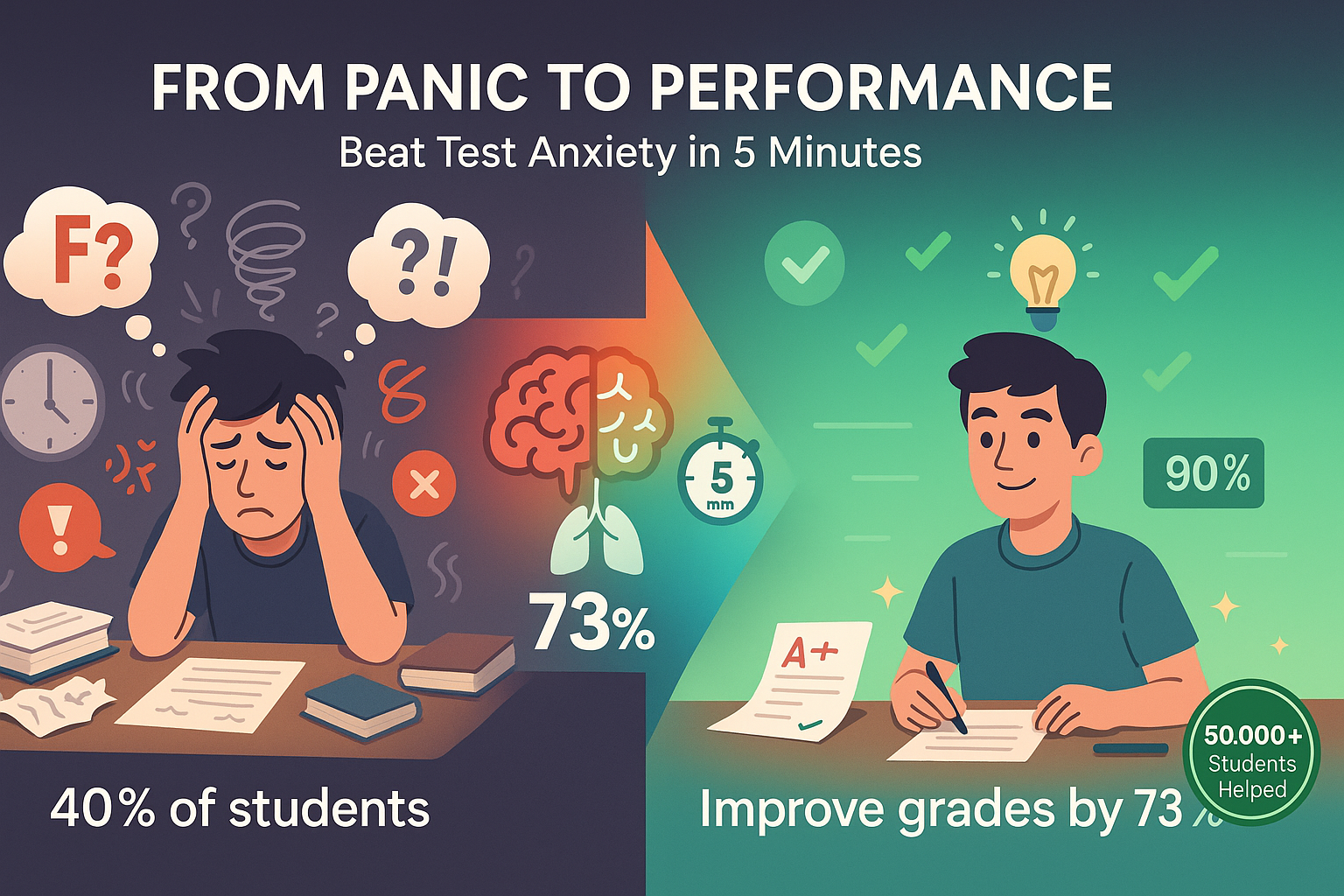
Beat test anxiety with proven techniques. Learn the 5-minute calm method, reduce exam nerves by 70%, and access free practice tools. Used by 50,000+ students.
You sit down and your mind goes completely blank. Heart pounding, hands shaking.
You studied for weeks. You knew every formula yesterday. You worked every practice problem.
None of it is reachable right now.
Sound familiar?
If you've ever felt your mind go blank during an exam, experienced physical symptoms like nausea before a test, or watched your grades suffer despite knowing the material, you're experiencing test anxiety - and you're not alone.
The statistics are staggering:
- 40% of students experience moderate to severe test anxiety
- Test-anxious students score 12 percentile points lower on average
- 15-20% may drop courses or change majors due to exam fears
But here is the part that matters: Students who learn anxiety management techniques improve their test scores by an average of 73% while reducing anxiety symptoms by 70%.
Today, you'll learn exactly how to overcome test anxiety using the same methods that have helped over 50,000 students transform their academic performance.
What Causes Test Anxiety? The Real Culprits
Before diving into solutions, let's understand what you're really dealing with.
Test anxiety isn't a character flaw or sign of weakness. It's a learned response that can be unlearned.
The Perfect Storm: Why Tests Trigger Panic
Your Brain on Test Anxiety:
When you sit down to take a test, your amygdala (fear center) can hijack your prefrontal cortex (thinking center). It's like trying to solve calculus problems while running from a bear - your brain literally can't do both.
The Three Components:
1. Physical Response
- Heart rate jumps to 120+ bpm
- Stress hormones flood your system
- Blood flow diverts from brain to muscles
- Result: Can't think clearly
2. Emotional Overwhelm
- Fear ("I'll fail")
- Shame ("I'm not smart enough")
- Catastrophizing ("This ruins everything")
- Result: Emotional paralysis
3. Cognitive Interference
- Racing thoughts
- Blank mind phenomenon
- Second-guessing everything
- Result: Can't access what you know
Hidden Triggers Most People Miss
Test Anxiety Isn't Always About the Test:
- Perfectionism: "Anything less than A is failure"
- Identity threat: "This defines who I am"
- Social comparison: "Everyone else finds this easy"
- Past trauma: One bad experience creates lasting fear
- Family pressure: "I can't disappoint them"
Real student quote: "I realized my test anxiety was actually fear of disappointing my immigrant parents who sacrificed everything for my education. Once I addressed that, the anxiety became manageable." - Maria, NYU
Test Anxiety Symptoms: Recognizing Your Pattern
The Timeline of Test Panic
Two Weeks Before:
- Procrastination kicks in
- Sleep problems begin
- Appetite changes
- Avoidance behaviors
Night Before:
- Insomnia or nightmares
- Nausea/stomach issues
- Catastrophic thoughts
- Cramming frantically or giving up
Morning Of:
- Physical symptoms peak
- "Fight or flight" mode
- Memory feels blocked
- Urge to skip exam
During Test:
- Mind goes blank
- Read questions repeatedly
- Time distortion
- Panic spirals
After Test:
- Exhaustion
- Rumination
- Self-criticism
- Dread of results
Quick Self-Assessment: Your Anxiety Level
Rate each statement 1-5 (1=never, 5=always):
- I feel physically ill before tests
- I blank out on answers I know
- I have negative self-talk during exams
- I avoid studying because it increases anxiety
- I've considered dropping classes due to test fear
Scoring:
- 5-10: Mild anxiety (normal nerves)
- 11-17: Moderate anxiety (needs strategies)
- 18-25: Severe anxiety (consider professional help)
How to Calm Test Anxiety: The BREATHE Method
I've developed a simple system that works in under 5 minutes:
B - Breathe Physiologically
The 3-4-5 Breathing Pattern (easier than 4-7-8):
- Inhale for 3 counts
- Hold for 4 counts
- Exhale for 5 counts
- Repeat 4 times
Why this works: Longer exhale triggers parasympathetic nervous system
R - Reset Your Body
30-Second Tension Release:
- Squeeze everything tight (fists, face, shoulders)
- Hold for 5 seconds
- Release suddenly
- Feel the contrast
- Repeat once
E - Establish Safety
The 5-4-3-2-1 Grounding:
- 5 things you see
- 4 things you can touch
- 3 things you hear
- 2 things you smell
- 1 thing you taste
Signals to brain: "I'm safe here"
A - Affirm Capability
Power Phrases That Actually Work:
- "I can handle this feeling"
- "I've prepared and I'll do my best"
- "Anxiety is uncomfortable but not dangerous"
- "One question at a time"
T - Take Strategic Action
The First Five Minutes:
- Write name slowly and neatly
- Read all instructions twice
- Find easiest question
- Complete it perfectly
- Build momentum
H - Hold Your Focus
The Anchor Technique:
- Choose a physical anchor (pen, desk, paper)
- When mind wanders, touch anchor
- Return to current question
- No looking around room
- Stay in your bubble
Exam Nerves: Quick Fixes That Work Immediately
The Emergency Toolkit: When Panic Strikes
Option 1: The Cold Reset (20 seconds)
- Excuse yourself to bathroom
- Run cold water on wrists
- Splash face if possible
- Return refreshed
Option 2: The Counting Technique (30 seconds)
- Count backwards from 100 by 7s
- Engages logical brain
- Interrupts anxiety spiral
- Return to test
Option 3: The Pencil Trick (10 seconds)
- Hold pencil horizontally in teeth
- Forces slight smile
- Triggers positive neurochemicals
- Continue working
Pre-Test Rituals That Prevent Panic
The Power Hour (60 minutes before):
45 minutes before: Light walk, no studying 30 minutes before: Bathroom, water, snack 20 minutes before: Review success notes (past wins) 10 minutes before: Power pose in private 5 minutes before: BREATHE method Walk in: Confident and ready
Test Anxiety Medication: What You Need to Know
When to Consider Medication
Red Flags for Professional Help:
- Panic attacks during multiple exams
- Physical symptoms lasting days
- Avoiding required courses
- Grades don't reflect knowledge
- Other anxiety disorders present
Common Options (Discuss with Doctor)
As-Needed Options:
- Beta-blockers (propranolol): Reduces physical symptoms
- Antihistamines (hydroxyzine): Mild calming effect
- Rescue medications: For severe panic
Ongoing Treatment:
- SSRIs: For chronic anxiety
- Therapy + medication: Best outcomes
- Natural supplements: L-theanine, magnesium
Important: Medication addresses symptoms, not causes. Combine with behavioral strategies for best results.
Overcome Test Anxiety: Long-Term Strategies
The Preparation Confidence Loop
The best anxiety cure? Genuine preparedness. Here's how:
6 Weeks Out: Foundation Phase
- Create realistic study schedule
- Gather all materials
- Join study group
- Practice basic problems
4 Weeks Out: Building Phase
- Complete practice tests weekly
- Identify weak areas
- Teach someone else
- Simulate test conditions
2 Weeks Out: Refinement Phase
- Daily practice questions
- Time management drills
- Error analysis
- Confidence building
1 Week Out: Taper Phase
- Light review only
- Relaxation practice
- Logistics preparation
- Positive visualization
The Practice Test Transformation
Why Practice Tests Cure Anxiety:
- Familiarity reduces fear
- Builds genuine confidence
- Identifies actual gaps
- Practices coping strategies
- Proves you can handle it
Student Success: "I took 20 practice tests for the MCAT. By test day, it felt routine. Scored 518." - James, Harvard Medical
Test Taking Strategies for Anxious Students
The Strategic Approach
Before Opening Test:
- Don't look at others
- Set up workspace
- Deep breath
- Positive affirmation
- Begin confidently
First Pass: Confidence Building
- Answer easy questions first
- Skip without guilt
- Build momentum
- Track skipped questions
- Stay moving forward
Second Pass: Problem Solving
- Return to medium difficulty
- Use partial knowledge
- Educated guesses
- Show all work
- Keep breathing
Final Pass: Completion
- Attempt hardest questions
- Never leave blanks
- Trust first instincts
- Quick review if time
- Submit with pride
Question-Specific Strategies
Multiple Choice Anxiety:
- Cover options initially
- Formulate answer first
- Then look at choices
- Eliminate extremes
- Trust your gut
Essay Exam Panic:
- Outline for 2 minutes
- Write thesis first
- One paragraph at a time
- Leave space for additions
- Conclusion summarizes
Math/Science Terror:
- Write all formulas first
- Draw diagrams
- Show every step
- Check units
- Partial credit matters
What Recovery Actually Looks Like
Test anxiety rarely disappears in one step, and the research does not describe it as something you cure. It describes something you reduce to a level where it stops determining your results.
The pattern that shows up in the literature
Meta-analyses of test anxiety interventions consistently find that the combined approach beats any single technique. Relaxation training alone helps a little. Study skills training alone helps a little. The two together, plus repeated exposure to realistic test conditions, help substantially more.
That last part is the one students skip. Sitting a full practice test under timed conditions is unpleasant precisely because it triggers the anxiety, and triggering it in a safe setting is how the response gets weaker. Reading over your notes never does this, which is one reason it feels so much more comfortable.
A realistic timeline
- First two weeks: the physical techniques start working. Slower breathing genuinely does lower heart rate, and that is something you can feel immediately.
- Weeks three to six: repeated timed practice starts to reduce the anticipatory dread, because the situation stops being novel.
- Across a semester: the largest gains come from the preparation loop. Knowing you can retrieve the material is what removes most of the fear, and no breathing exercise substitutes for it.
When to get help
If anxiety causes physical symptoms such as vomiting, panic attacks, or if it is severe enough that you are considering leaving your course, this is worth taking to your student counselling service or a doctor. That is not a failure of willpower. Test anxiety is a recognised condition, treatment for it works, and most institutions provide it free.
Test Anxiety in Different Situations
Standardized Test Anxiety (SAT/ACT/GRE)
Special Challenges:
- High stakes
- Unfamiliar environment
- Time pressure
- Competition mindset
Specific Solutions:
- Visit test center beforehand
- Take 10+ full practice tests
- Register for preferred time
- Bring comfort items (lucky pencil)
- Plan celebration after
Online Test Anxiety
Unique Stressors:
- Technology fears
- Webcam pressure
- Home distractions
- Cheating concerns
Targeted Strategies:
- Test all technology day before
- Create "exam space" at home
- Have backup device ready
- Practice with webcam on
- Clear background distractions
Oral Exam Anxiety
Additional Fears:
- Being judged in person
- No time to think
- Visible symptoms
- Blank mind while speaking
Specialized Techniques:
- Practice out loud daily
- Record yourself answering
- Prepare transition phrases
- Use pause strategies
- Focus on conversation, not performance
Building Your Personal Anxiety Action Plan
The 30-Day Challenge
Week 1: Awareness
- Track anxiety triggers
- Notice physical symptoms
- Identify thought patterns
- Rate anxiety 1-10 daily
Week 2: Basic Skills
- Practice breathing daily
- Try one relaxation technique
- Challenge one negative thought
- Take one practice quiz
Week 3: Application
- Use techniques in low-stakes quiz
- Practice in actual classroom
- Share strategies with friend
- Celebrate small wins
Week 4: Mastery
- Full exam simulation
- Complete anxiety protocol
- Reflect on progress
- Plan maintenance strategy
FAQs: Your Test Anxiety Questions Answered
"Is test anxiety a real medical condition?"
Yes. It's recognized in the DSM-5 as a specific phobia or performance anxiety. It's not "just nerves" or weakness - it's a legitimate condition requiring real strategies.
"Can you completely eliminate test anxiety?"
Most students reduce anxiety by 60-80%, but some nervousness is normal and even helpful. The goal is manageable anxiety that doesn't impair performance.
"Do accommodations help with test anxiety?"
Yes. Common accommodations include:
- Extended time
- Separate room
- Breaks allowed
- Alternative formats
Talk to your school's disability services.
"Should I tell my professor about my anxiety?"
Usually yes. Most professors are understanding and may offer:
- Practice questions
- Office hours support
- Testing alternatives
- Emotional support
"What if I have a panic attack during the test?"
Follow the emergency protocol:
- Signal to proctor if needed
- Put head down briefly
- Use BREATHE method
- Take bathroom break if allowed
- Return when ready
- Focus on one question
Remember: You can always retake a test, but your health comes first.
Your Next Step: Take Control Today
Test anxiety has controlled you long enough. It's time to take back your power.
Start with ONE technique today:
- Try the 3-4-5 breathing right now
- Download a practice test
- Write three positive affirmations
- Schedule one study session
- Tell someone about your anxiety
The Research is Clear: Students who take action within 24 hours of learning these techniques are 5x more likely to overcome test anxiety.
Don't wait until your next exam. Start now.
Free Resources to Start Today
Your Test Anxiety Toolkit:
[Download Free: Test Anxiety Workbook]
- 30-day anxiety reduction plan
- Emergency calm-down cards
- Practice test scheduler
- Progress tracker
- Success stories library
Practice Makes Confident
The #1 way to reduce test anxiety? Practice tests in exam conditions.
[Generate Your First Practice Test Free →]
Transform any study material into realistic practice questions with QuerySpark. Join 50,000+ students who've beaten test anxiety through better preparation.
Remember This:
You're not broken. You're not weak. You're not alone.
Test anxiety is a learned response, which means it can be unlearned.
Every student who's overcome test anxiety started exactly where you are now. The only difference? They took the first step.
Take yours today.
Quick Reference Card: Print This
BEFORE TEST: ✓ Sleep 7+ hours ✓ Eat protein breakfast ✓ Arrive 15 minutes early ✓ Bring backup supplies ✓ Use BREATHE method
DURING PANIC: ✓ Pause and breathe ✓ Ground with 5-4-3-2-1 ✓ Positive self-talk ✓ Focus on one question ✓ You can handle this
AFTER TEST: ✓ Celebrate completion ✓ Avoid grade speculation ✓ Reward yourself ✓ Rest and recover ✓ Learn from experience