Overview
After consuming 47 research papers in 30 days, I could barely recall key findings. Here's the active reading method that changed everything and what neuroscience says about retention.
Introduction: The Moment of Truth
It was week four of my literature review. My advisor asked a simple question: "What did the Chen et al. study conclude about working memory?"
I froze.
I'd read that paper. Just three days ago, actually. I'd even highlighted the important parts in bright yellow. But standing there in her office, I couldn't recall a single detail.
"The Chen study... it was about... memory?" I offered weakly.
She gave me that look. You know the one. The "did you actually read this or just skim it?" look.
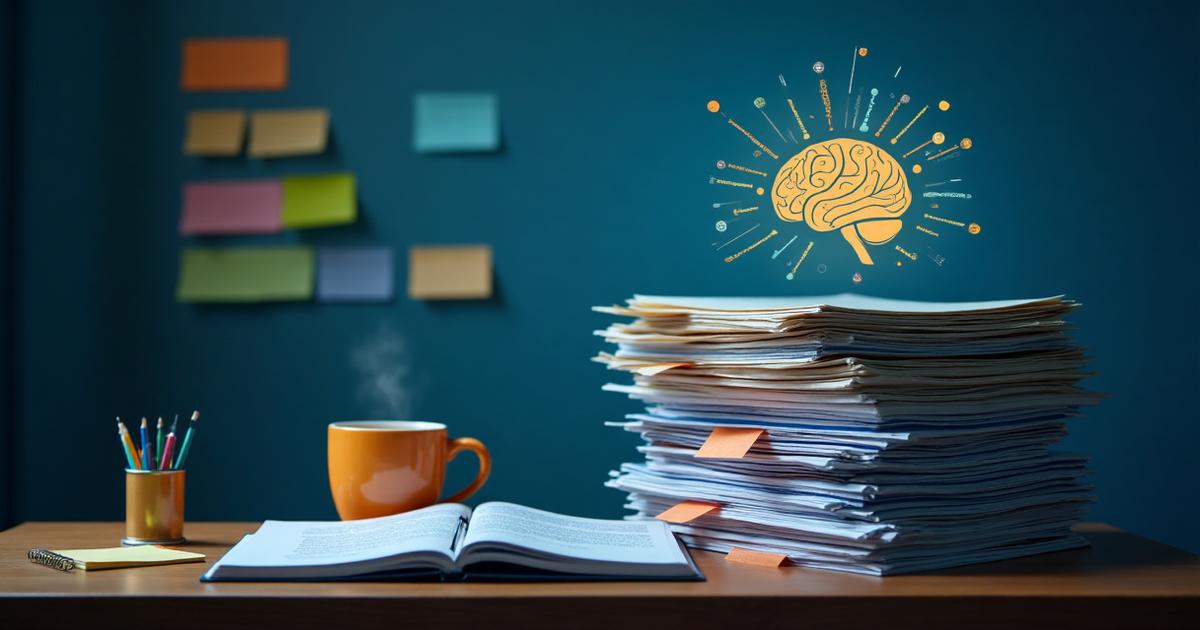
The truth was worse. I had read it. Carefully. Along with 46 other papers that month. I had a folder full of highlighted PDFs and a Notion page with bullet points. But when it came time to actually use that knowledge?
Nothing. Just a vague sense that I'd seen something about memory somewhere.
That embarrassing moment led me down a rabbit hole of research on... well, research. How do we actually retain what we read? Why does highlighting feel productive but leave us empty-handed when it matters?
What I discovered changed how I approach every paper, article, and book I read. And the difference is measurable, not just in what I remember, but in how I think.
The Illusion of Learning: Why Passive Reading Fails
Here's the uncomfortable truth: most of what we call "studying" or "reading" is just performance theater.
We highlight sentences. We take notes. We underline key passages. It feels productive. Our brains reward us with little dopamine hits: "Look at all this yellow! You're really getting it!"
But feelings lie.
The Science of Why We Forget
Research from cognitive psychology is brutally clear about this. In a landmark 2013 study published in Psychological Science, researchers found that students who simply re-read material scored significantly lower on comprehension tests than those who used active retrieval methods.
The forgetting curve, first documented by Hermann Ebbinghaus in 1885, shows that we lose approximately:
- 50% of new information within one hour
- 70% within 24 hours
- 90% within a week
But here's what's fascinating: This forgetting isn't inevitable. The curve flattens dramatically when we engage with information actively rather than passively consuming it.
The Highlighting Trap
Let me tell you about my old reading process, which might sound familiar:
- Open PDF
- Read from start to finish
- Highlight "important" parts (usually 40% of the paper)
- Maybe write a few notes in the margins
- Close PDF, feel accomplished
- Forget everything within 48 hours
The problem? Highlighting is a recognition task, not a recall task.
When you highlight, you're essentially saying, "Yes, this seems important." You're recognizing significance. But recognition is the lowest form of learning. It creates what researchers call "fluency illusions", the false sense that because information looks familiar, you actually know it.
Try this experiment: Open a paper you highlighted last month. Cover the highlights. Can you predict which passages you highlighted? Most people can't.
That's because the highlighting was performative. Your brain never actually processed the information deeply enough to store it in long-term memory.
What Actually Works: The Question-Based Reading Method
After that humiliating meeting with my advisor, I spent a week reading everything I could find about learning science, memory, and retention. The pattern was consistent across decades of research:
Questions are the most powerful tool for learning.
Not just any questions, the right questions, asked at the right time, in the right way.
Why Questions Work: The Neuroscience
When you read a statement, your brain processes it superficially. It's passive. Information goes in, maybe gets stored in working memory, but rarely makes it to long-term storage.
But when you generate a question from that same information, something different happens:
- Deeper Processing: Your brain has to reorganize the information into question format, forcing deeper engagement
- Retrieval Practice: Answering questions (even your own) activates the same neural pathways you'll need later
- Schema Building: Questions help you connect new information to existing knowledge
- Error Generation: When you predict answers, even incorrect predictions strengthen memory
This isn't theory. It's measurable. A 2018 meta-analysis of 118 studies found that practice testing (question-based learning) improved retention by an average of 50% compared to simple re-reading.
The Method I Discovered
Here's what I changed, and what you can implement today:
Instead of reading a paper and highlighting, I now:
- Read with question intent - As I read each section, I'm thinking: "What question would this answer?"
- Generate questions immediately - After each major section, I write 3-5 questions
- Answer without looking - I close the paper and try to answer my questions from memory
- Review and refine - I check my answers, adjust questions that were too easy or unclear
- Space the repetition - I review these questions after 1 day, 3 days, and 1 week
The first time I tried this method, it felt slow and frustrating. Reading one paper took twice as long.
But here's what happened: One week later, my advisor asked about a different study. This time, I could recall not just the main findings, but the methodology, the limitations, and how it connected to three other papers in my review.
She was impressed. I was shocked.
The Five Types of Questions That Maximize Retention
Not all questions are created equal. Through trial and error (and a lot more research), I identified five question types that work better than others for research papers and dense material.
1. Definition Questions (Foundation Level)
Example: "What is working memory as defined in this study?"
These establish basic understanding. They're your foundation. Without solid definition questions, everything else crumbles.
When to use: For key terms, concepts, and frameworks introduced in the paper.
2. Explanation Questions (Understanding Level)
Example: "How does the dual-task paradigm test working memory capacity?"
These force you to understand mechanisms and processes, not just memorize facts.
When to use: For methodologies, processes, and cause-effect relationships.
3. Application Questions (Transfer Level)
Example: "How could this working memory finding apply to classroom learning?"
These are where learning becomes valuable. You're not just storing information, you're developing the ability to use it.
When to use: After understanding the core content, push yourself to see applications.
4. Analysis Questions (Critical Thinking Level)
Example: "What limitations in the Chen study might affect the generalizability of these findings?"
These develop critical thinking and help you evaluate research quality.
When to use: For every study's methodology and conclusions.
5. Synthesis Questions (Expert Level)
Example: "How does Chen et al.'s finding about working memory relate to the Baddeley model discussed in the 2019 review?"
These connect ideas across papers, building your expert understanding of a field.
When to use: When reviewing multiple papers or building your literature review.
My Current Reading Workflow (Real Talk)
Let me walk you through exactly how I read a research paper now. This is the real process, not the idealized version.
Before Reading (2 minutes)
I scan the abstract and ask myself three questions:
- What's the main research question?
- What's the key finding?
- Why does this matter to my work?
If I can't answer these, I read the abstract again. No point diving deep into a paper you don't understand at a high level.
Active Reading (15-30 minutes for a typical paper)
I read section by section. After each major section (Introduction, Methods, Results, Discussion), I pause and:
- Write 3-5 questions about that section
- Try to answer them without looking
- Check my answers and revise questions if needed
For a typical 8-page research paper, I end up with 12-20 questions.
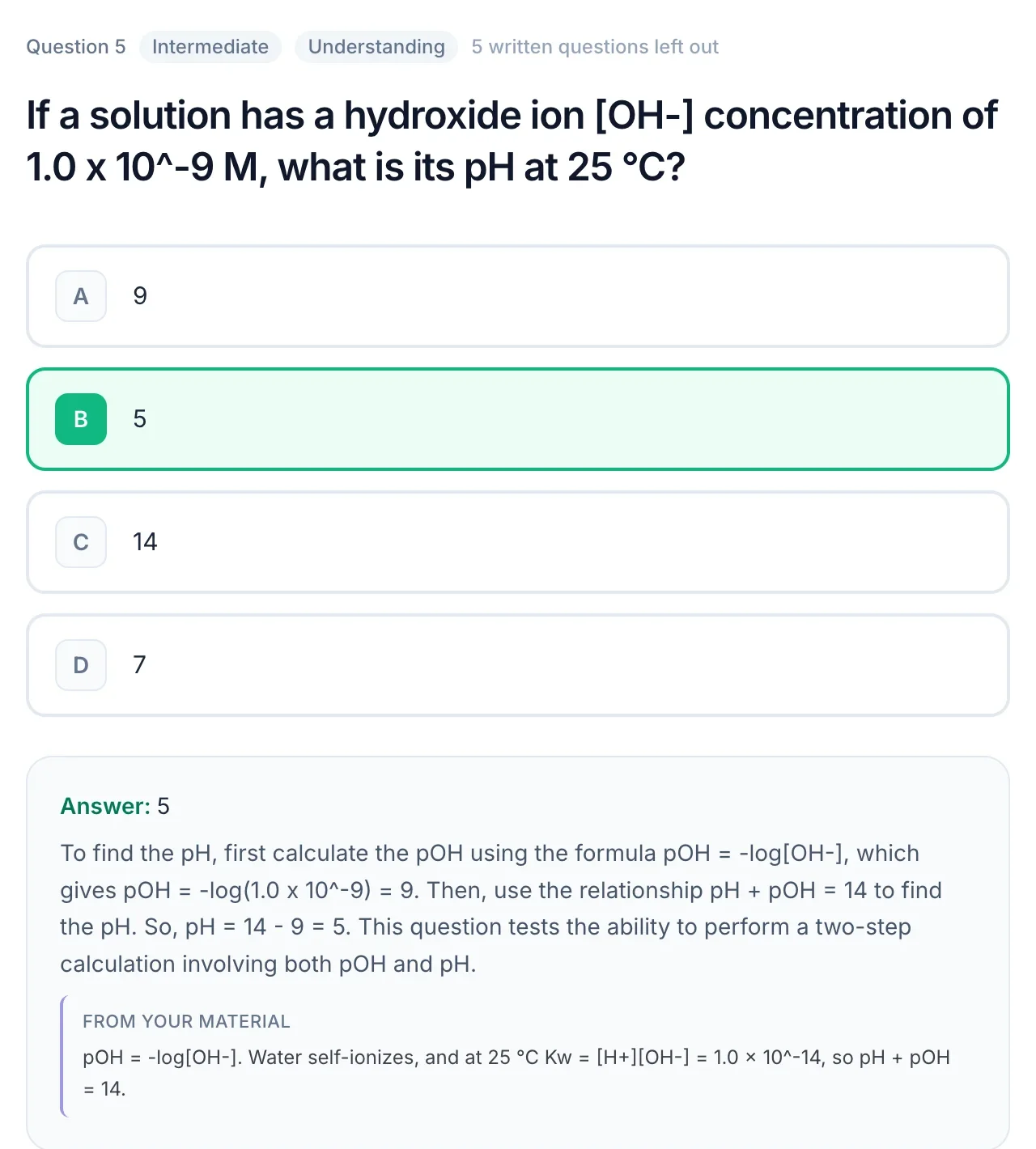
This is where I used to use QuerySpark (and still do for longer papers). Instead of manually writing questions, I can upload the PDF, generate questions automatically, then refine them. What used to take 30 minutes of question-writing now takes 5 minutes of question-reviewing.
After Reading (10 minutes)
I do two things:
- Create a 1-paragraph summary in my own words
- Write one "so what?" statement, why this paper matters
Then I schedule my review sessions in my calendar:
- Review 1: Tomorrow
- Review 2: Three days from now
- Review 3: One week from now
Weekly Review (30 minutes)
Every Friday, I review all questions from papers I read that week. I shuffle them, answer them, and identify patterns:
- Which questions are too easy? (I delete or modify)
- Which questions do I keep getting wrong? (I need to re-read that section)
- What connections am I seeing across papers? (I create synthesis questions)
The Results: By The Numbers
I've been using this method for eight months now. Here's what's changed:
Measurability:
- Before: I could accurately recall details from ~15% of papers I read after one week
- After: I can accurately recall details from ~70% of papers using this method
- Time invested: About 40% more time during initial reading
- Time saved: Massive reduction in re-reading (I used to re-read papers 3-4 times; now usually just once)
Qualitative improvements:
- My literature reviews are deeper and more connected
- I can participate in discussions about papers I read months ago
- My advisor stopped giving me "that look"
- I actually enjoy reading papers now (weird, but true)
Unexpected benefits:
- Better at identifying weak methodologies
- Faster at reading new papers (the question-generation muscle strengthens)
- More confident in presentations and discussions
- Writing is easier because I actually remember what I've read
Common Objections (And My Responses)
"This takes too much time!"
Yes, initially. But here's the math:
Old method:
- Initial reading: 20 minutes
- Re-reading because I forgot: 20 minutes × 3 times = 60 minutes
- Total: 80 minutes + frustration
Question method:
- Initial reading with questions: 35 minutes
- Review sessions: 5 minutes × 3 = 15 minutes
- Total: 50 minutes + actual retention
Plus, I'm not stuck in that panic cycle of "I know I read something about this somewhere..."
"I'm not good at generating questions"
Neither was I. The first questions I wrote were terrible:
- Too obvious: "What did the study find?" (Useless)
- Too vague: "What about memory?" (What does this even mean?)
- Too complex: "How does the interaction between working memory capacity and attentional control moderate the effect of dual-task interference on retention in both verbal and visual domains?" (Nobody can answer this)
You get better with practice. Start with the five question types I outlined earlier. Use them as templates.
And honestly? This is where AI tools like QuerySpark help tremendously. They generate quality questions you can learn from and model.
"What about fiction or lighter reading?"
This method is overkill for reading a novel or a blog post for pleasure. Use it for material where retention matters:
- Academic papers
- Textbooks
- Professional development books
- Technical documentation
- Industry reports
- Anything you might need to reference later
For everything else, read for joy. Not everything needs to be optimized.
How to Start Tomorrow
Don't try to overhaul your entire reading system at once. Here's a minimal viable approach:
Week 1: Practice with one paper
Pick one research paper or article you need to read this week. Use the five question types. Generate 10-15 questions. Answer them. That's it.
Week 2: Add review sessions
Keep generating questions for new material, but now schedule three review sessions for your previous week's questions.
Week 3: Refine your questions
Look at the questions from weeks 1 and 2. Which ones helped? Which ones didn't? Adjust your question-generation approach.
Week 4: Make it systematic
By now, you've read 4 papers with questions. You have a system that works for you. Make it your default reading approach.
The Tools That Help (What I Actually Use)
I'm not doing this all manually. Here's my actual toolkit:
For question generation:
- QuerySpark: My go-to for automatically generating questions from PDFs. Saves enormous time.
- Manual generation: For shorter articles or when I want to practice the skill
For organization:
- Notion: Where I store all questions, organized by paper/topic
- Anki: For spaced repetition of the most important questions
- Calendar: For scheduling review sessions
For annotation:
- Zotero: PDF management and basic highlighting
- ReadWise: For capturing highlights from articles
But honestly? You could do this entire method with just:
- A notebook
- The papers you're reading
- Your brain
The tools make it easier and more systematic, but the method is what matters.
What I Wish I'd Known Earlier
Looking back at those 47 papers I read before discovering this method, I have some regrets. Not because I wasted time (that's already gone), but because of what I could have learned.
Here's what I wish someone had told me:
- Feeling productive is not the same as being productive. Highlighting feels great. But retention is what counts.
- Your brain is wired for questions. We evolved to solve problems, not to passively absorb information. Work with your biology, not against it.
- The effort is the point. Question generation feels harder than highlighting because it is harder. That difficulty is desirable. It's what creates learning.
- You can't optimize your way out of thinking. There's no shortcut to understanding. But there are better methods than hoping highlighting will magically create comprehension.
- Start before you feel ready. I spent months researching the "perfect" reading method before implementing anything. Just start. Refine as you go.
The Bigger Picture: What This Really Taught Me
This journey from forgetting 47 papers to actually retaining what I read taught me something bigger than reading techniques.
It taught me that learning is not about information consumption. It's about information transformation.
Reading is not learning. Highlighting is not learning. Even taking notes is not learning.
Learning is what happens when you actively reconstruct information in your own mind. When you generate questions, you're forcing that reconstruction. You're not just storing facts, you're building a mental model.
That mental model is what you need when your advisor asks you a question. When you're writing a paper. When you're having a discussion. When you're trying to apply research to real-world problems.
Information consumption is easy and feels productive. Information transformation is hard and often feels frustrating.
But only one of them creates actual learning.
Your Turn: The Challenge
Here's what I want you to do this week:
- Choose one thing you need to read - A paper, a chapter, a report
- Read it with questions - Generate 10 questions as you read
- Answer them without looking - Test your actual retention
- Review after 24 hours - See what stuck
That's it. Just one cycle.
I'm betting you'll be surprised at how much more you retain. Not just the basic facts, but the connections, the implications, the applications.
And maybe, like me, you'll never go back to the highlighting-and-hoping method again.
FAQ: Questions About Question-Based Reading
How many questions should I generate per paper?
For a typical 8-10 page research paper, aim for 15-20 questions. That's about 2-3 questions per major section. Quality matters more than quantity, one good question that forces deep thinking beats ten superficial ones.
What if I can't answer my own questions?
Perfect! That tells you exactly what you need to re-read. Questions aren't just for testing. They're diagnostic tools. When you can't answer a question, you've identified a gap in your understanding.
Can I use this method for textbooks?
Absolutely. In fact, many textbooks already include questions at the end of chapters. Use those, but also generate your own as you read. The act of generation is what matters.
How long until this feels natural?
For me, about 3-4 weeks. The first few papers felt awkward and slow. By paper 10, I was naturally thinking in questions as I read. Now it's automatic.
Is AI-generated question as good as manual?
Different purposes. AI (like QuerySpark) is excellent for:
- Speed (5 minutes vs 30 minutes)
- Coverage (catches things you might miss)
- Learning question patterns
Manual is better for:
- Developing your question-generation skill
- Highly specific questions for your unique needs
- When you want to practice the cognitive work
I use both: AI to generate a foundation, then add my own specific questions.
What about when I'm in a rush?
Even generating just 5 quick questions is better than zero. Don't let perfect be the enemy of good. A rushed question-based reading will serve you better than a thorough passive reading.
Can this work for non-academic reading?
Yes! I use modified versions for:
- Business books (application questions)
- Industry reports (implication questions)
- News articles (analysis questions)
- Technical docs (explanation questions)
Adjust the question depth to your retention needs.
Resources & Further Reading
If you want to dive deeper into the science behind this:
- "Make It Stick" by Brown, Roediger & McDaniel - Comprehensive overview of learning science
- "How Learning Works" by Ambrose et al. - Academic but accessible
- Karpicke & Blunt (2011) - The landmark study on retrieval practice
- Dunlosky et al. (2013) - Review of effective learning techniques
And if you want to try generating questions from your next PDF automatically: Try QuerySpark free - No signup required for your first document.
Final Thoughts
That embarrassing moment in my advisor's office was a gift. It forced me to confront the gap between reading and learning, between highlighting and understanding.
47 papers later, I finally know what actually stuck: nothing, because my method was broken.
But everything I've read since then? That's different. Not because I got smarter, but because I started asking questions.
You can too.
Start with your next paper. Generate some questions. See what happens.
I'm betting you'll remember more than you expect.
And maybe, unlike me with those 47 papers, you won't have to experience that mortifying moment of realizing you remember nothing.
Ready to transform how you read? Upload your next PDF to QuerySpark and let AI help you generate the questions that make knowledge stick. Get started free →
What's your biggest challenge with remembering what you read? Drop a comment below, I read and respond to all of them.